
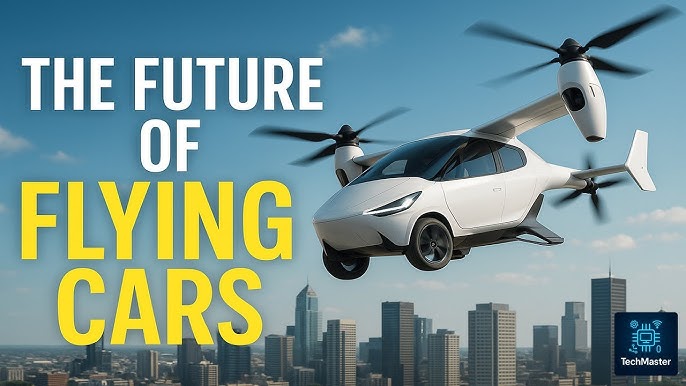
The world of transportation is on the cusp of a revolutionary transformation. For decades, humans have imagined flying cars, driverless vehicles, and hyper-efficient transit systems. Now, thanks to advances in technology, robotics, and artificial intelligence, these visions are closer to reality than ever before. The future of transportation promises not only to redefine how we move but also how we live, work, and interact with our environment.
Even industries seemingly unrelated to transportation, such as online gaming platforms like Togelslot88, are reflecting the same drive for innovation and seamless experiences—where speed, efficiency, and technology converge to redefine traditional models.
Flying Cars: From Science Fiction to Reality
Flying cars have long been a staple of science fiction, imagined in films, books, and futuristic art. Today, several companies are actively developing prototypes capable of vertical takeoff and landing (VTOL), combining the versatility of drones with the speed and convenience of automobiles.
Key players in the field are addressing several challenges:
-
Energy Efficiency: Electric propulsion systems are becoming increasingly viable, promising sustainable and quiet operation.
-
Safety Regulations: Government agencies worldwide are creating regulatory frameworks to ensure safety standards for flying vehicles.
-
Urban Infrastructure: Cities are beginning to plan “sky lanes” and vertiports to accommodate flying cars in dense urban areas.
With these developments, flying cars may soon transition from luxury novelties to practical urban transport options.
Autonomous Vehicles and AI Integration
Flying cars are not the only innovation on the horizon. Ground transportation is also evolving rapidly through autonomous vehicles. Self-driving cars, trucks, and buses promise to reduce accidents, optimize traffic flow, and offer more accessible mobility for the elderly and disabled.
Artificial intelligence plays a central role in this shift. Machine learning algorithms enable vehicles to adapt to complex road conditions, predict human behavior, and even communicate with each other in real time. Companies testing autonomous vehicles emphasize the importance of reliability, cybersecurity, and seamless human-vehicle interaction.
Interestingly, the online world, including platforms like Togelslot88, demonstrates a similar reliance on AI for personalization, predictive analytics, and user experience. Just as AI guides autonomous vehicles safely through city streets, it also enhances engagement and efficiency in digital environments.
Hyperloop and Next-Generation Rail Systems
Beyond cars, transportation may soon be transformed by innovations in rail and mass transit. Concepts like Elon Musk’s Hyperloop propose high-speed travel in low-pressure tubes, potentially reaching speeds of over 700 miles per hour.
Next-generation rail systems will emphasize:
-
Energy Efficiency: Magnetic levitation and low-friction tracks reduce energy consumption.
-
Interconnected Networks: Seamless integration between different modes of transportation, including flying cars, autonomous vehicles, and public transit hubs.
-
Passenger Comfort and Safety: Innovations in design, acceleration, and braking systems enhance both comfort and safety.
These systems aim to reduce travel times dramatically while minimizing environmental impact, setting the stage for a truly globalized and interconnected society.
Urban Mobility and Smart Cities
The future of transportation is deeply intertwined with the development of smart cities. Urban planning will focus on multi-modal mobility, ensuring smooth transitions between autonomous cars, public transit, bike-sharing programs, and even aerial taxis.
Smart traffic management systems, powered by sensors and AI, will optimize flow, prevent congestion, and improve air quality. Cities may incorporate vertical takeoff zones for flying cars, automated parking systems, and AI-assisted pedestrian pathways.
Even digital platforms, such as Togelslot88, reflect this trend in virtual urbanization. Gaming communities mimic smart city ecosystems, where efficiency, strategy, and optimization define success—showing how technological innovation influences multiple facets of life.
Sustainability in Transportation
A crucial aspect of future transportation is sustainability. Flying cars, autonomous vehicles, and hyperloop systems all depend on energy-efficient and renewable power sources. Electric propulsion, solar charging stations, and low-carbon infrastructure are essential for reducing environmental impact.
As people adopt cleaner transportation technologies, cities will see lower emissions, improved air quality, and reduced noise pollution. This shift mirrors online platforms like Togelslot88, where digital engagement reduces the environmental footprint compared to traditional entertainment, highlighting a growing global emphasis on sustainability.
Challenges Ahead
Despite promising advancements, the future of transportation faces significant hurdles:
-
Regulatory and Legal Issues: Governments must establish safety, licensing, and liability standards for flying and autonomous vehicles.
-
Cost and Accessibility: High costs may limit adoption, requiring innovative business models to make futuristic transportation accessible to the masses.
-
Cybersecurity Risks: As vehicles become increasingly connected, protecting them from hacking and digital manipulation is critical.
-
Infrastructure Adaptation: Cities must adapt roads, airspace, and transit hubs to accommodate entirely new modes of transportation.
Addressing these challenges will require collaboration between engineers, policymakers, urban planners, and industry leaders worldwide.
The Social Impact of Advanced Transportation
The implications of flying cars and autonomous systems extend beyond technology. Faster, safer, and more efficient transportation will reshape work, leisure, and social interaction. Commutes could become productive time for work or entertainment. Remote communities may gain better access to essential services. And cities may evolve around new mobility corridors rather than traditional road networks.
Platforms like Togelslot88 demonstrate the social side of technology adoption: just as innovative transportation transforms daily life, digital innovation reshapes social habits, entertainment, and connectivity. Both highlight how society adapts to convenience, efficiency, and engagement.
The future of transportation is more exciting than ever. Flying cars, autonomous vehicles, hyperloop systems, and smart urban mobility are poised to redefine how humans move and interact with the world. These innovations promise efficiency, safety, sustainability, and accessibility, ultimately reshaping modern life.
Interestingly, trends in digital platforms such as Togelslot88 echo this evolution: speed, personalization, and technology-driven efficiency define the experiences we seek both online and offline.
As we look ahead, one thing is clear: the convergence of technology, infrastructure, and human ingenuity will take transportation—and society—to new heights. Flying cars may no longer just be a dream; they are a tangible step toward a faster, smarter, and more connected future.
Read Also: The KICK-ASS contest Blog: Insights & Inspiration

